



An illustrated example of a personalised dream reading
A dream exploration, deep and revealing, which descends into the most buried strata of the unconscious, crossing the visible layers to reach the troubled zones and to welcome what escapes language. In that inner space, logic gives way to free association, to metamorphoses and to symbols.
The dream becomes living matter. Between emergence and disappearance, it reveals less a definitive truth than an inner landscape in perpetual transformation.
Looking up a symbol in an encyclopedia gives you a lead. Having a whole dream read is another matter : the narrative counts, the order of the scenes counts, and above all what the dreamer is living at the time the dream occurs. Here, on a real case, is what that difference produces.
The dream presented here was genuinely dreamt and recounted by a real person. It is published with their consent, and their identity is not disclosed. The illustrations accompanying it were made from the dreamer's account.
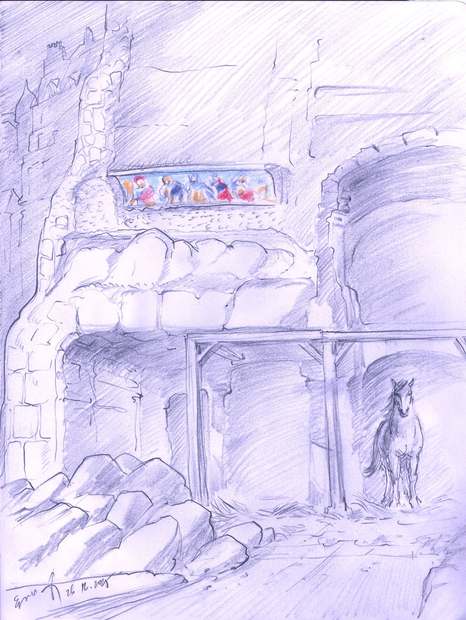
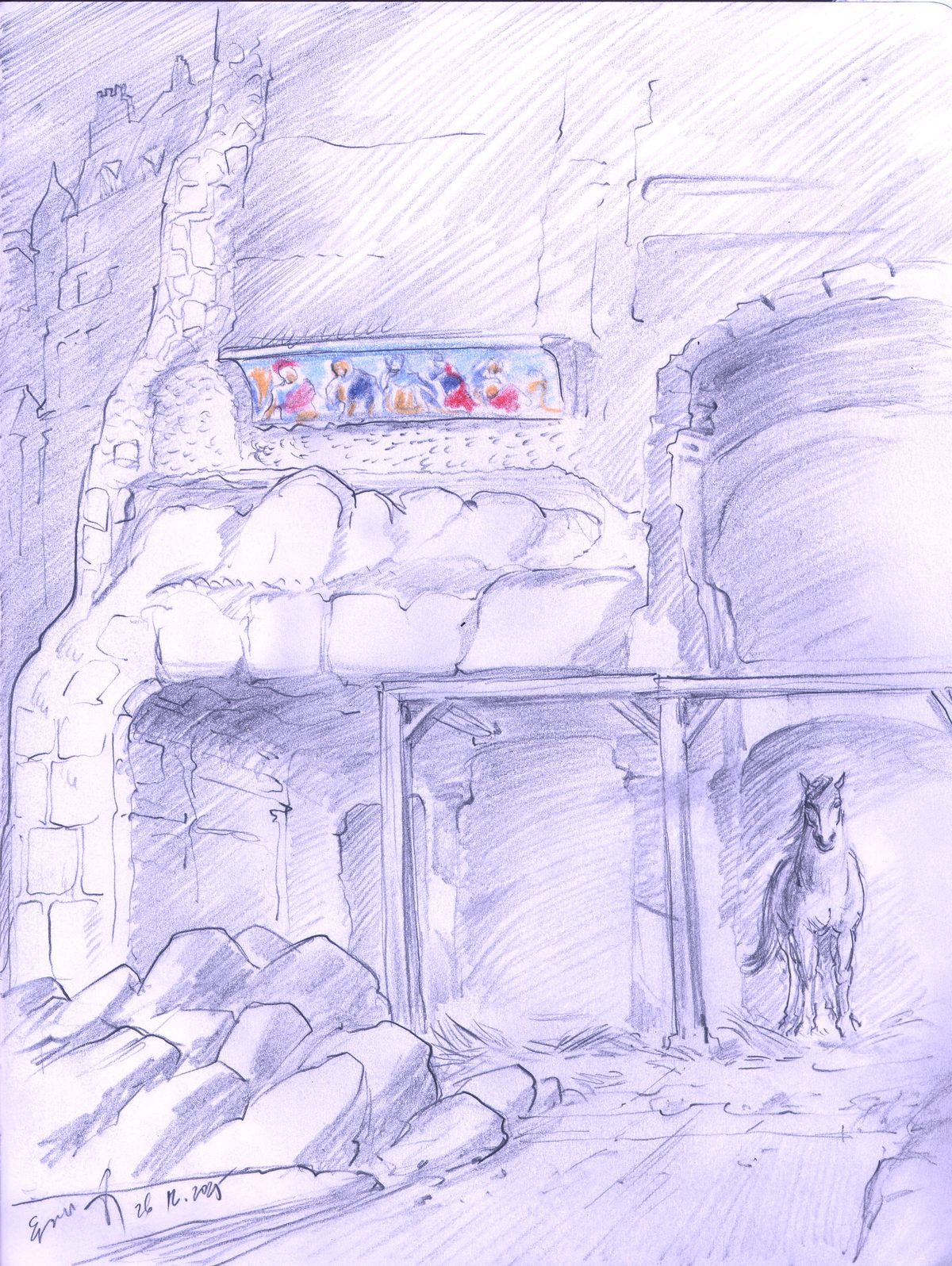
"A church needs renovating. A man presents me with an administrative arrangement with an institution. The church is abandoned, in the town centre. I go there to raise male horses for breeding. All the other stables raise females. The church is built of solid stone, but part of the building has vanished following a vertical "strike" — a section of the structure is missing. You can see the height of the ground floor, and the corridors that lead to the upper floors.
It's decided : I think about how to get up to the higher level.
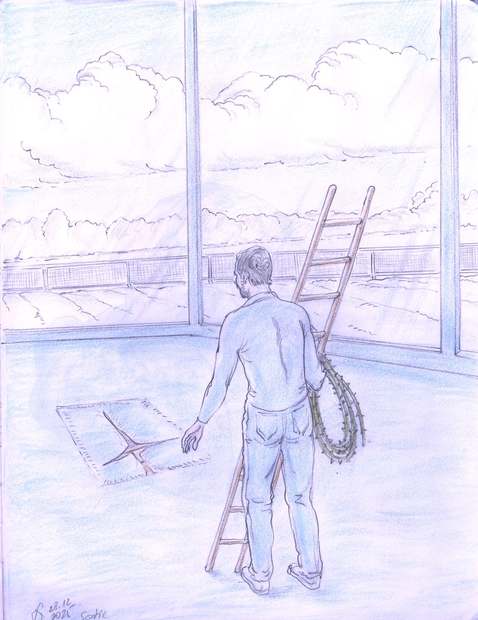
I look for a ladder and a kind of vine, like a thorny rose stem, inside a company with light blue walls and floor, and large glass windows. Inside, I'm accompanied by a female presence. She tells me to take the stepladder and the vine, then to go outside. She explains that everyone leaves through a hole in the light blue lino floor, a kind of decoy. Indeed, I see other people going through this hole. But I've taken the ladder and the thorny vine. As she insists, I go through the hole in the floor too, and we come out into the garden in front of the building.
There, we're chased. A man accuses us of trying to leave without authorisation. The garden is surrounded by white fencing, made of pale earth, in front of the building.
We're forced to go into an office, an open space, then to a counter to explain ourselves.
In the end, we're found to be in the right, and we're allowed to leave with both items : the ladder and the vine. The ladder will let me reach the upper floor of my church, where colourful frescoes lie covered in dust.
The administrative process ends in a last-minute release, followed by stepping out into the open air.
I then return to the church to climb to the upper floor. The frescoes need restoring. I climb to the first floor, on the left, passing beneath the colourful frescoes, determined to enter the upper level.
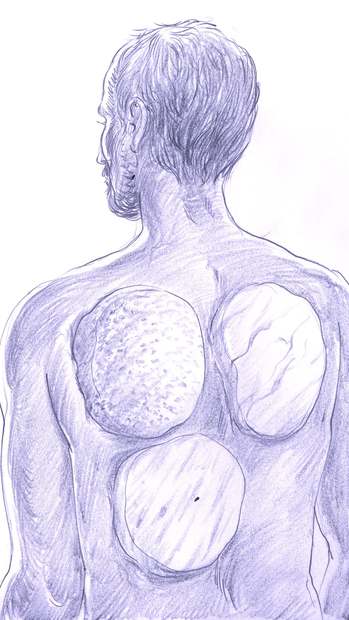
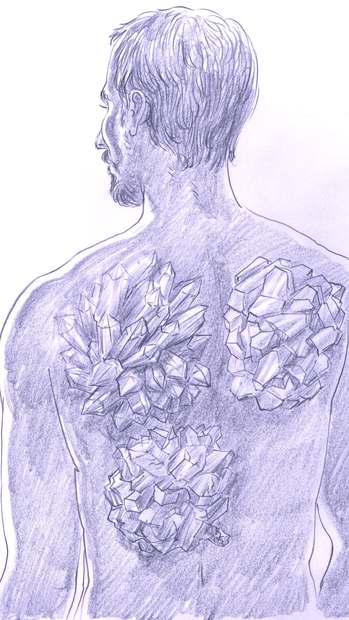
On my back, I see three flat stones, this time polished. Before, these hard stones were shaped like crystals. They are granite, marble, and a third, extremely hard stone."
Details shared by the dreamer about their life at the time the dream occurred.
In real life, the dreamer is a painter who set aside his artistic career for a long period for financial reasons. During that time, he worked on commission : illustrations for newspapers and advertising. Now in midlife, following a personal crisis, he wishes to return to his artistic practice and find his way back to painting, which he had set aside for many years.
The interpretationThis dream can be read as a return to personal work after a long period of interruption, but also as the recovery of an artistic legitimacy.
The abandoned church, standing at the heart of the town, represents a deeply personal inner and artistic place. It is not destroyed : it is old, solid, but left dormant. The dreamer doesn't want to demolish it, but to restore it. This suggests that creation never actually disappeared ; he kept drawing, taking on commercial commissions. What was truly set aside was painting as personal work.
The male horses kept for breeding, housed in the church, symbolise a fertilising creative force seeking to be reborn. After years devoted to professional and financial necessities, something wants to produce life, creation, and work once again.
The vertically missing part of the church evokes a break in continuity : the artistic path hasn't disappeared, but it has been interrupted. Now a way must be found to climb to the upper floors.
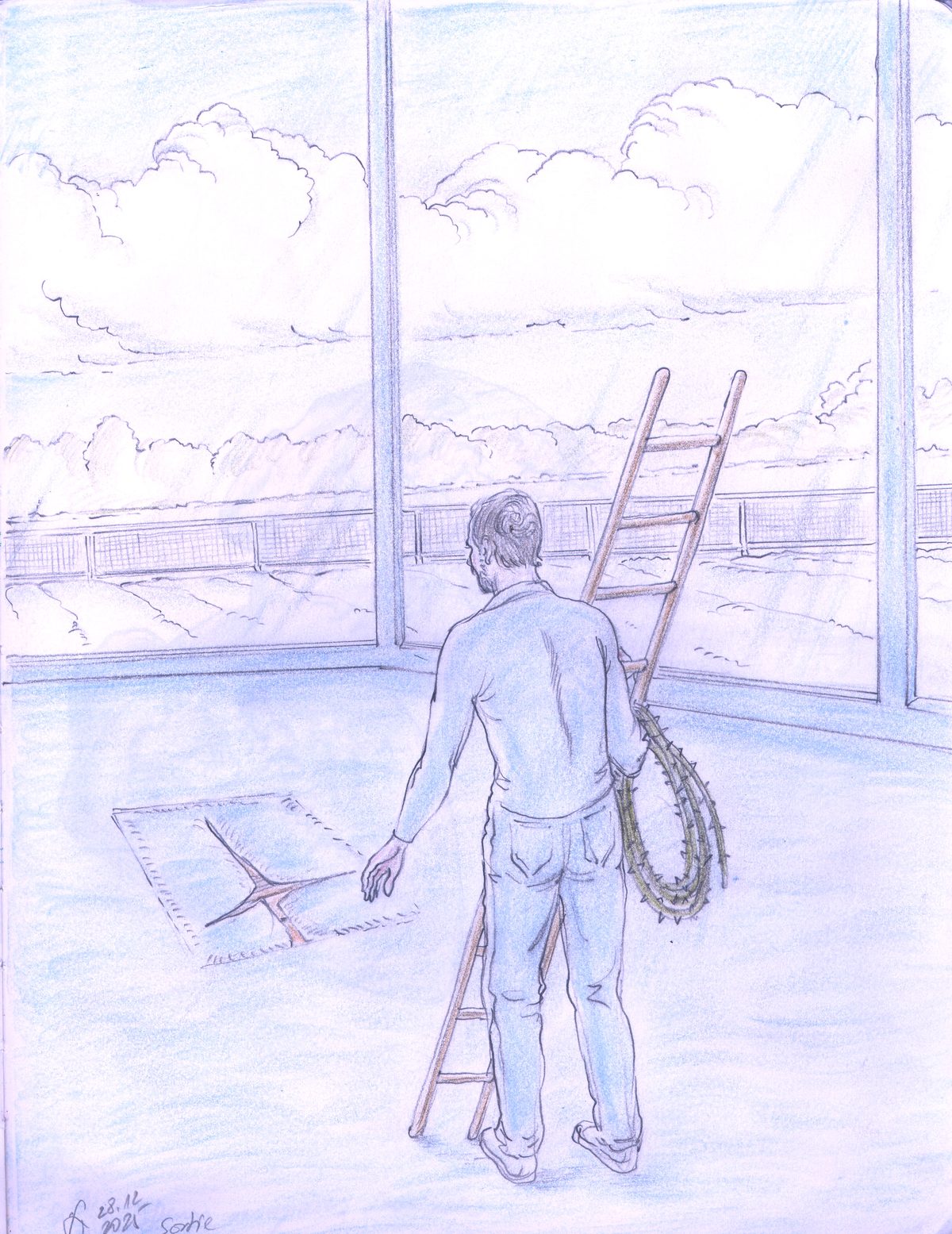
To do so, the dreamer looks for a ladder and a vine. The ladder represents structure, concrete means, and strategy ; the vine, more instinctive and thorny, represents creative desire and intuition, along with the pain and vulnerability tied to returning to art. Importantly, he retrieves them from the company where he worked : all those professional years have left him with tools he can now use to return to his work.
The modern, administrative company, with its rules and counter, represents the world of work, constraints, and permissions. When he's accused of trying to leave "without authorisation," the dream stages a deep question : "Do I have the right to leave the constraints of the working world to return to my own painting?" And the answer is yes : authorisation is ultimately granted. It's a genuine scene of inner legitimisation.
The passage from the building to the garden and then outside reinforces this idea of liberation and transition : authorisation → retrieving the tools → returning to the church → ascent.
At the top are the colourful frescoes, covered in dust. They are still there, beneath the dust accumulated over time. So the dream isn't saying the work is dead or that everything must start over, but rather that something already exists and needs to be found, cleaned, and restored. The personal painting never truly disappeared ; it was covered over.
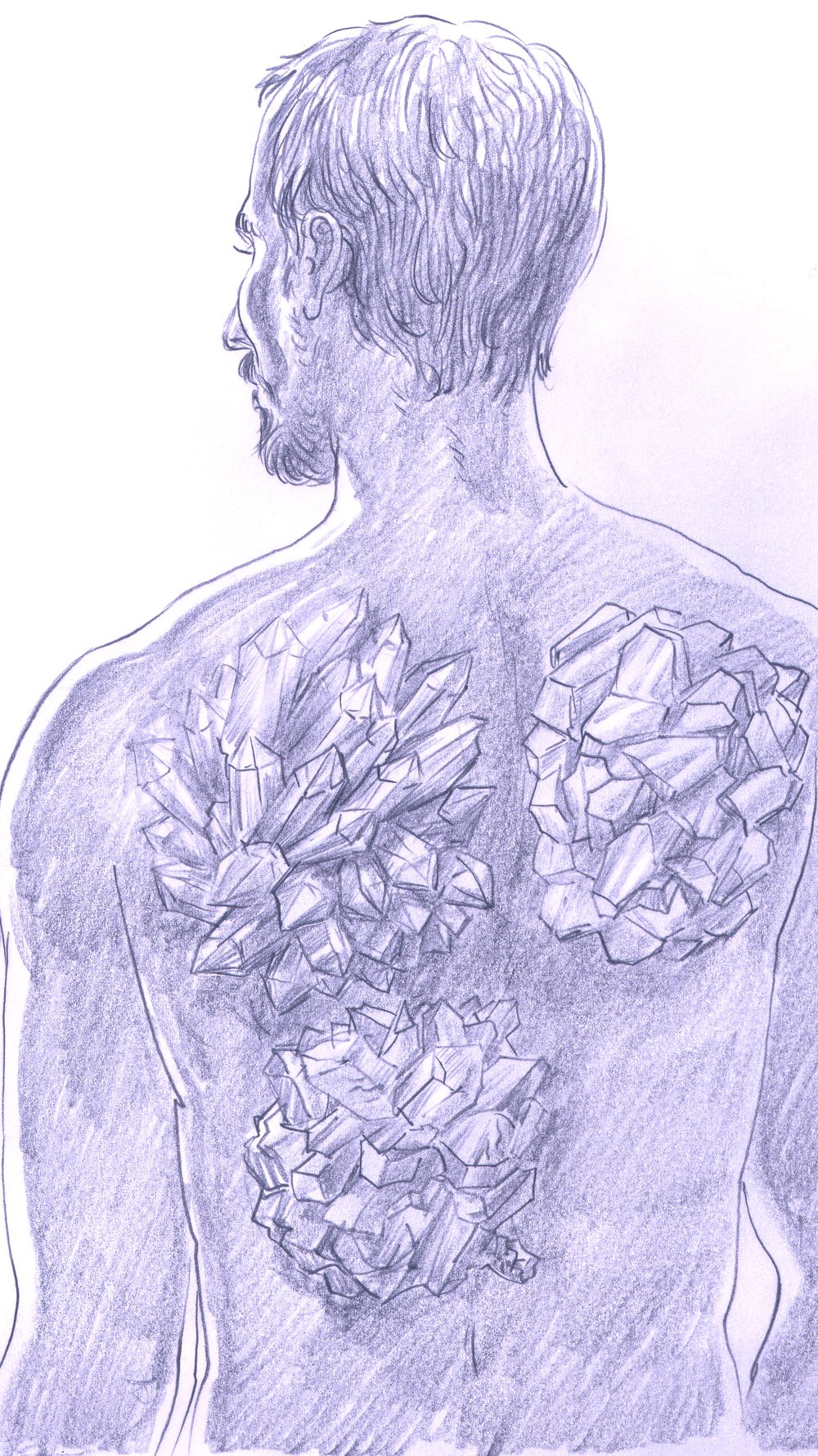
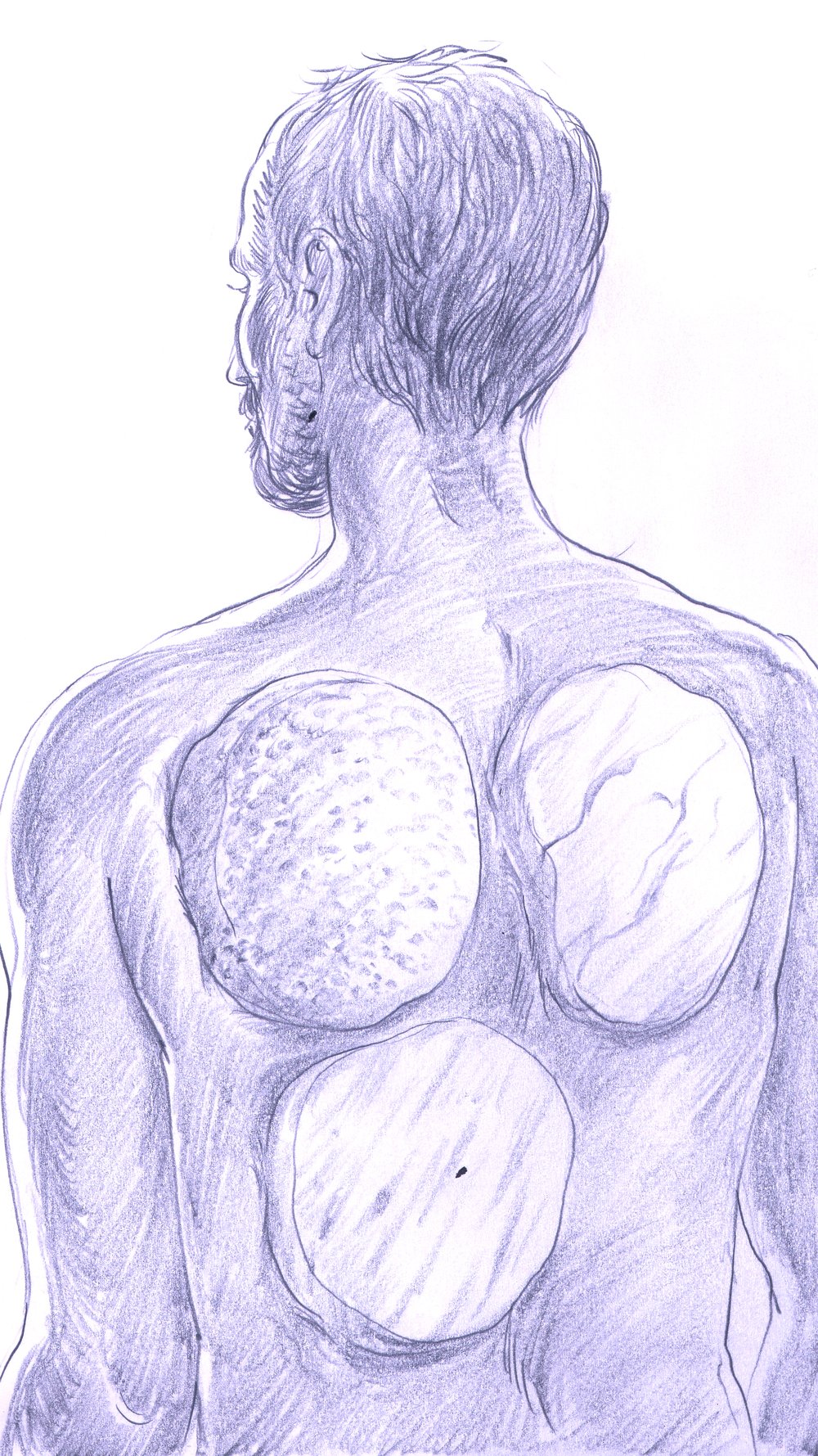
Finally, the three flat, polished stones — once crystals — are perhaps the strongest symbol. They represent what was accumulated over that long period : craft, observation, maturity, life lived. They are heavy, but now polished and mastered. So the dream doesn't present that past period merely as lost time : they transformed the material the artist now returns with.
The deep message of the dream might then be :
"You haven't lost your artist. You worked a long period on the ground floor, and now you're going back up to the floor where your personal work lives. You don't return empty-handed : you bring with you experience and inner material. You have the right to go back up. What you're looking for doesn't need to be invented : it's already there, under the dust."
So perhaps this isn't about catching up on an interrupted career, but about beginning a new stage with all the experience of the first.
The artist doesn't return to painting as he was : he returns transformed!